Story Minds
World tick 798
Tonu is in the village square.
The runtime records a communication action. Tonu stays in the square.
- Selected aim
- Gather for the evening
- Action
- Communicate
- Recorded location
- Village square
Character intelligence for game developers
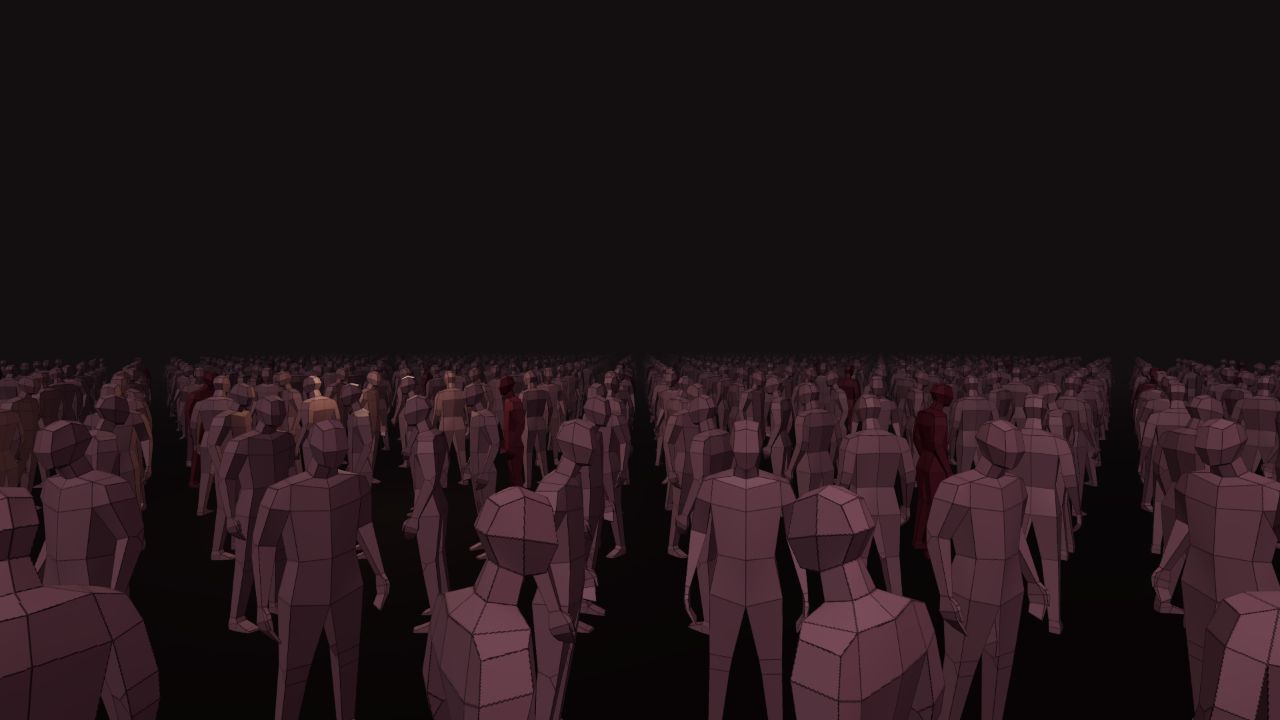
Story Minds is a modular procedural intelligence runtime. Define what characters know, need and can do. They choose their next action locally, without a language-model call for each decision.
Historical village · Estonia
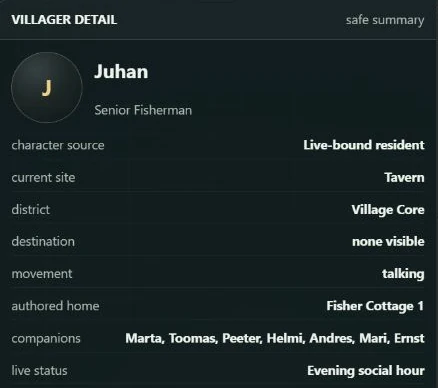
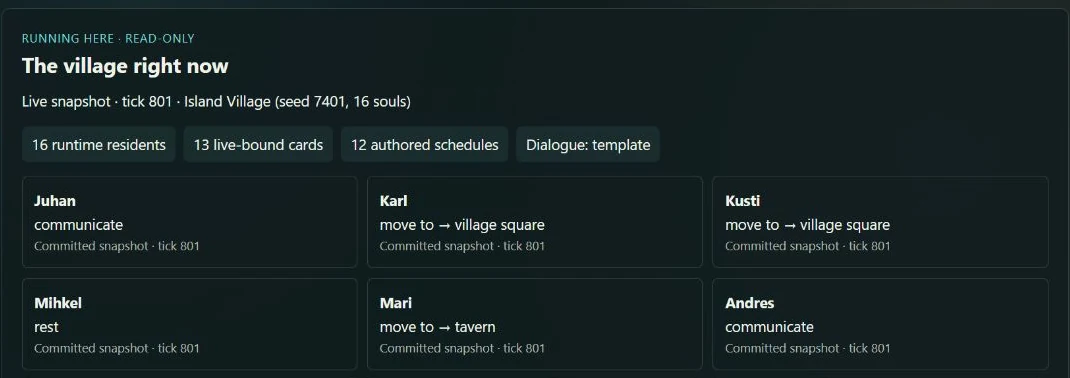
Sixteen characters share one village simulation. Follow a resident through their day, then inspect the action the runtime recorded.
From the simulation history
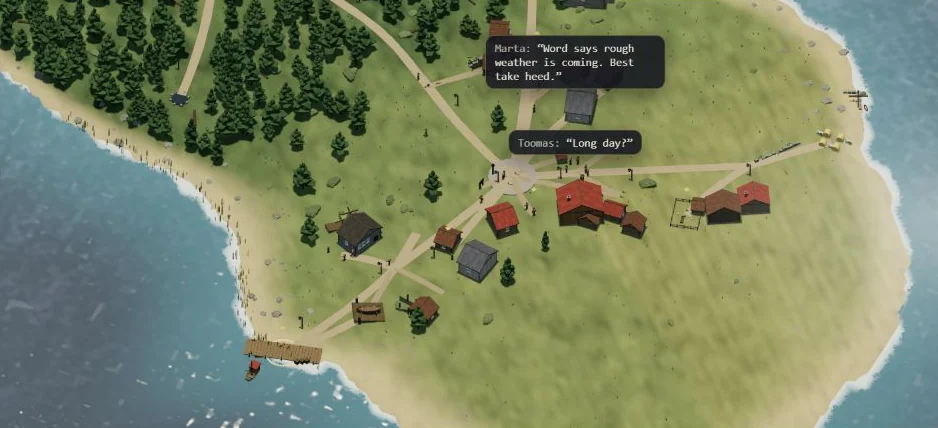
Tonu, the village smith, leaves the square for the north forest path. Explore three recorded updates to see his selected goal, movement and arrival.
The runtime records a communication action. Tonu stays in the square.
The runtime selects “seek solace” and moves Tonu from the village square to the north forest path.
His selected aim is still “seek solace.” The saved record places him on the north forest path again, this time resting.
Authoring character behaviour
Give characters reusable configurations. When the world changes, inspect how their decisions change with it.
Configure needs, role, memory and permitted actions. A fisher and a smith can share a work rule while each has a different workplace.
Connect people to places, reachable routes and usable objects. Supply the amount of a resource or a change in weather as world data.
Follow the recorded goal and action. Reproduce the supported run, change a priority or input, and compare the resulting decisions.
Today Configuration files, prototype tools and recorded actions. A unified creator interface is in development.
Inside a game update
The game supplies facts about the world. Story Minds weighs the character’s needs and goals, selects an available action, applies it and records the result.
Paths, resources, hazards
Knowledge, goals, permitted actions
Show the recorded action in the game
Use the same runtime version, configuration, starting state, random seed and ordered inputs. The supported deterministic path reproduces the sequence of decisions and state changes. Graphics and engine physics have their own timing.
The engine or a procedural generator supplies named locations, routes and objects with available actions. An adapter can tell the runtime that a path is open or an object holds food. A text game can supply the same facts.
Ruhnu currently uses template dialogue. We’re developing a compact specialist model to express a selected line using permitted context. Decisions and world changes stay with the runtime. Running the full system locally on typical PCs is a design target while we evaluate dialogue quality and hardware requirements.
Early creator access
We’re looking for small narrative and procedural game teams to try the runtime in one scene of their own. Tell us which engine you use, what happens in the scene and how you want a character to behave.
Contact the studio Opens an email draft to info@igikelts.com